homeschool

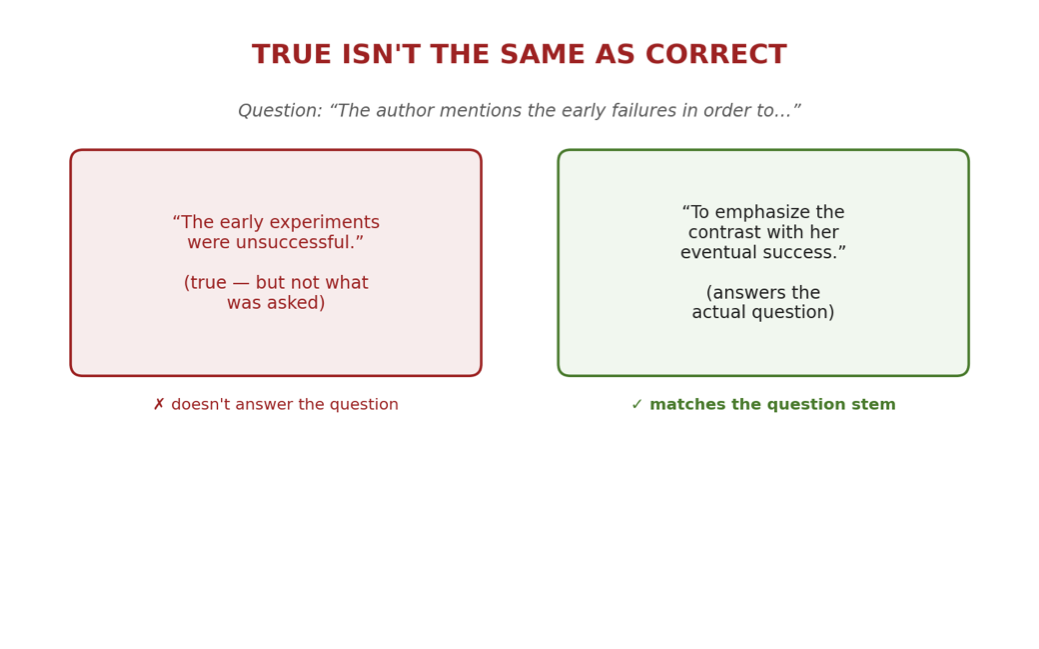
This SAT Reading Answer Is Technically True — And Still Wrong. Here’s Why.

This is one of the more counterintuitive things I tell parents, and I can usually see the moment of surprise on their face: your kid being a genuinely strong reader doesn’t protect against this trap. It can actually make it worse, because a strong reader trusts their own accurate recall of the passage and stops double-checking it against the actual question. The fix isn’t more reading practice. It’s a very specific, very small habit — reread the question — that takes about a week to make automatic and then just quietly stops costing points.
Read More

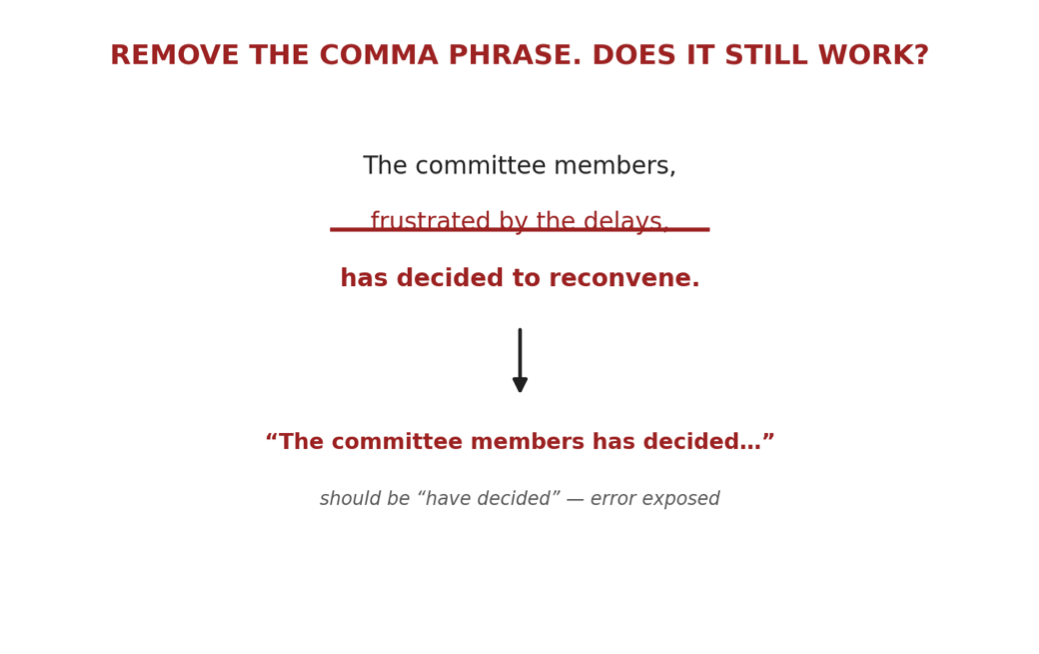
One Grammar Rule Fixes About Five SAT or ACT Questions. Here It Is.

Five minutes of instruction, disproportionate return — that’s rare enough in test prep that I genuinely enjoy teaching this one every single time. Most of what moves a score is slow, cumulative work across weeks. This is one of the very few exceptions: a single habit, taught once, that a student can apply correctly by the end of the same session. I wish there were ten more like it. There aren’t. This is the one.

Read More

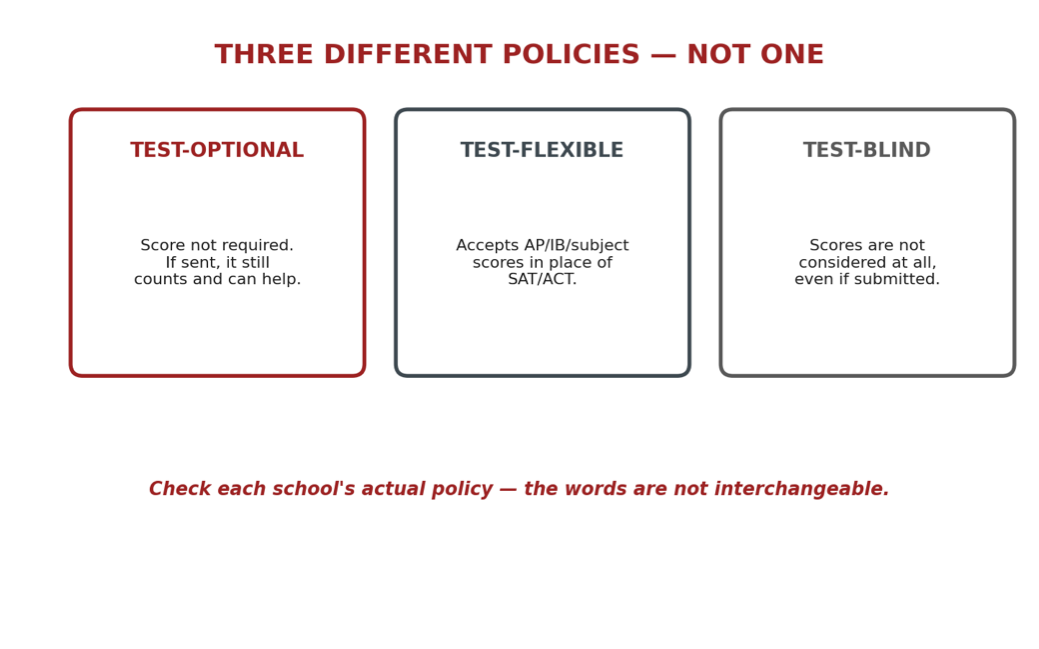
“SAT Test-Optional” Does Not Mean “Test-Blind.” Here’s the Difference That Matters.

I probably spend more time untangling this specific confusion than any other single admissions topic, and I don’t think it’s because families aren’t paying attention — it’s because the terminology genuinely invites the mistake. “Optional” sounds like “doesn’t matter,” and for most schools, it isn’t that at all. Getting this distinction right, school by school, is one of the highest-leverage things a family can do in the admissions process, and it costs nothing but a little bit of careful reading.

Read More

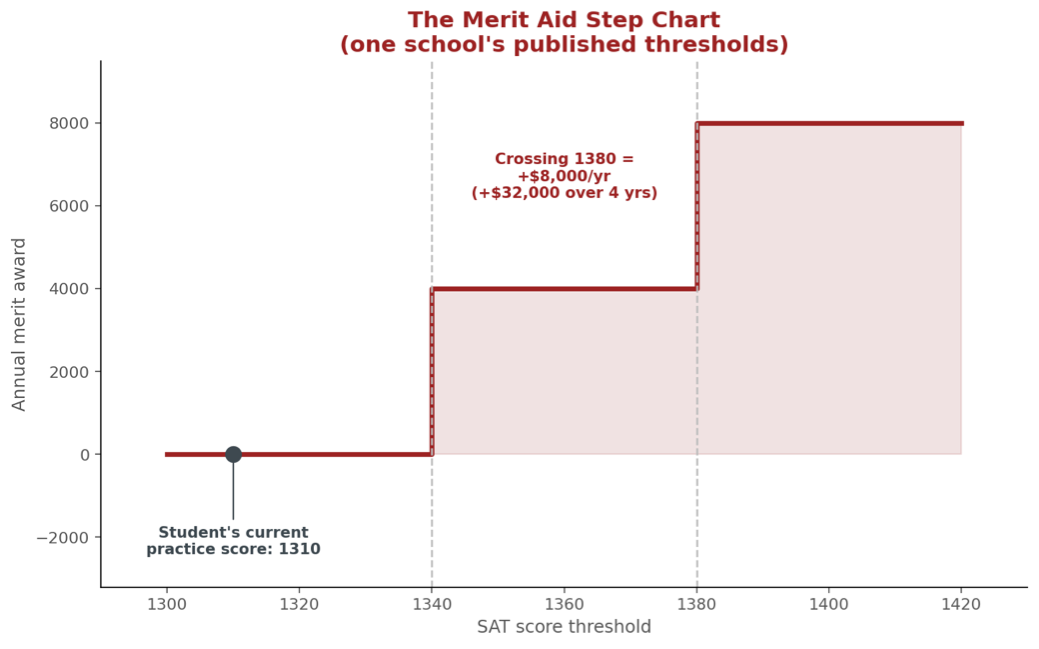
A 100-Point SAT Score Increase Can Be Worth Real Money. Let’s Do the Math.

This is the argument I make least often but probably should make more, because it tends to reframe the entire conversation for a family that’s on the fence about the cost of prep. “Will this help him get in” is a real question, but it’s a fuzzy one. “Will this cross a specific dollar threshold this specific school has already published” is not fuzzy at all — it’s arithmetic, and arithmetic tends to be a lot more persuasive at the kitchen table than a general appeal to “strengthening the application.”

Read More

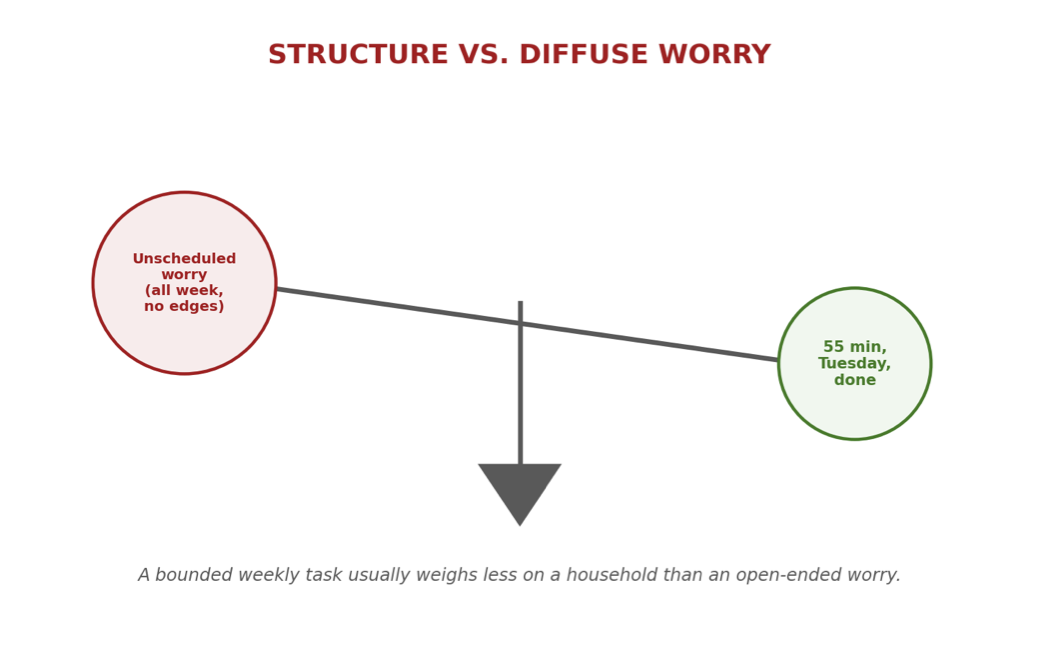
“SAT Prep Tutoring? We Don’t Want to Add One More Thing to Their Plate” — I Hear This a Lot

I take this objection seriously every time I hear it, because it usually comes from a parent who’s genuinely trying to protect their kid rather than one who’s just looking for an excuse. What I try to do in that conversation is make the actual trade-off visible — not “tutoring versus a light, worry-free schedule,” because that second option usually isn’t the real alternative on the table. The real alternative is often a kid quietly stressed about an approaching test with no plan attached to that stress at all, which is its own kind of load, just an invisible one.

Read More

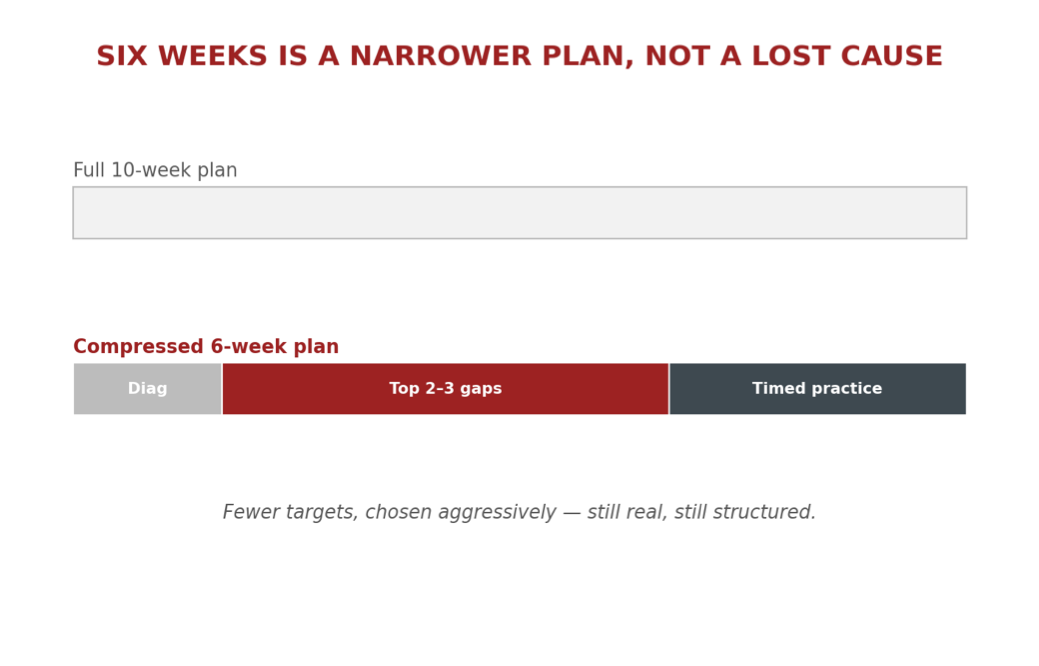
“Is It Too Late to SAT Prep Start Tutoring?” — I Get This Question Every Week

I’d rather lose a client to an honest “this timeline is genuinely too tight for what you’re hoping for” than take the money and quietly know it wasn’t realistic. That conversation happens rarely, but it happens, and I think families deserve a straight answer either way. The far more common version, though, is that six to eight weeks is plenty of time to do real, meaningful work — it just requires being sharper about what to prioritize than a longer runway would.

Read More

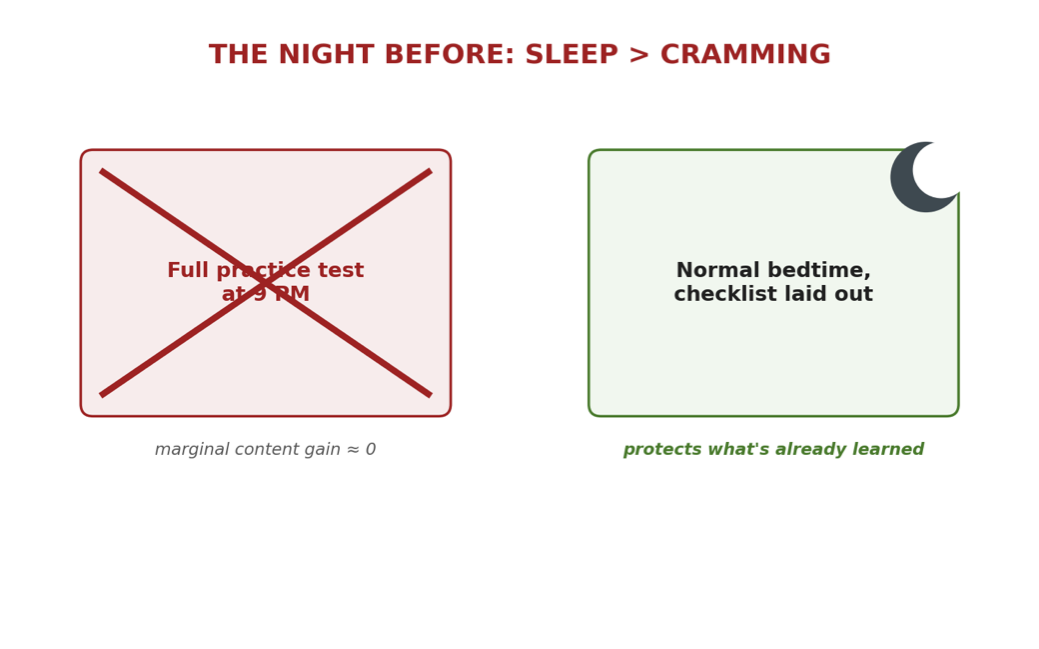
The Night Before the SAT, Here’s What Not to Do

This is the piece of advice I have the hardest time getting students to actually follow, because it feels so counterintuitive in the moment — like admitting defeat instead of pushing through. But I’ve never once seen a student meaningfully help their score by cramming the night before, and I’ve seen plenty rattle their own confidence by doing it. If there’s one instruction I want a family to actually enforce at home rather than leave up to a stressed seventeen-year-old’s judgment, it’s this one: close the books, and go to bed.

Read More

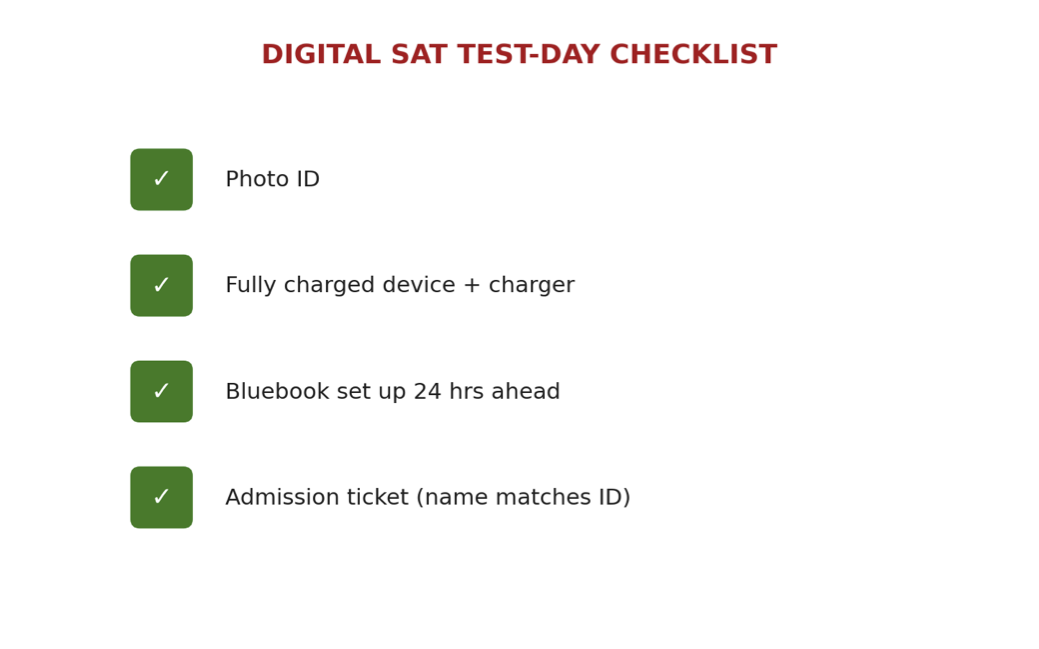
The Digital SAT Test-Day Checklist Nobody Sends You Until It’s Too Late

I genuinely think this is the most avoidable form of stress in the entire process, which is exactly why it bothers me the most when it happens. A kid can do everything right for ten weeks and still have a rough morning because an app needed an update at the worst possible moment. None of that is a reflection of preparation or ability — it’s a logistics failure, and logistics failures are the easiest category of problem to eliminate completely if you just do the boring checklist the night before instead of the morning of.

Read More

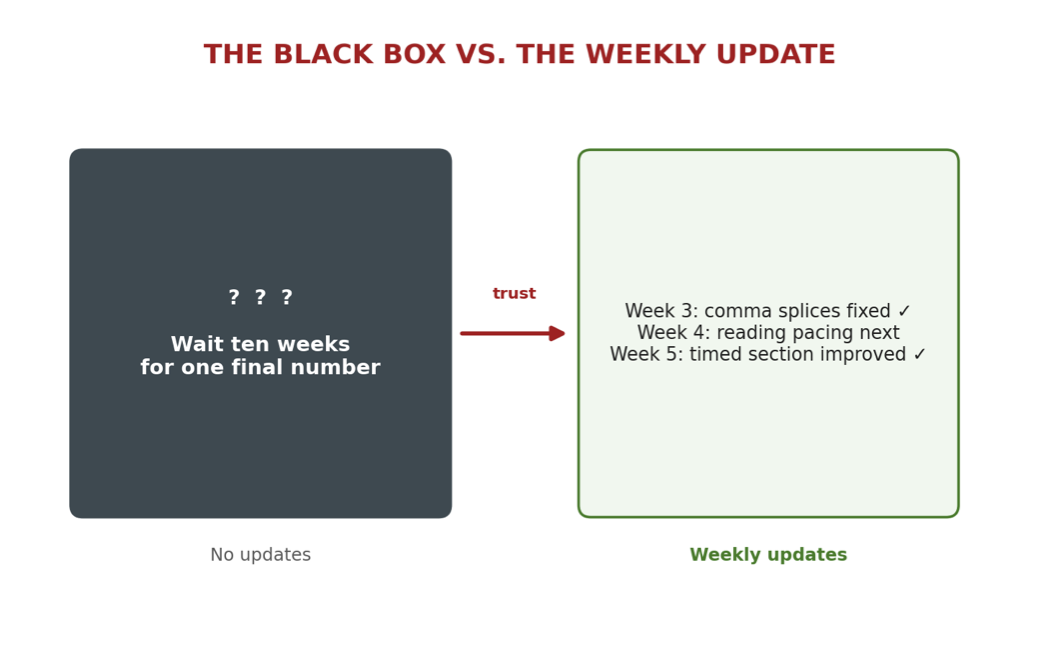
The SAT Score Jump Wasn’t the Part My Client Cared About Most

If I had to name the one habit that’s done the most for client retention over the years, it isn’t a teaching technique. It’s the weekly email. It costs me maybe ten minutes a student, and it consistently turns out to be the single thing families mention first when they talk about why the process felt trustworthy. I’d go so far as to say a tutor who can’t or won’t do this regularly is telling you something about how the rest of the process is probably being run, too.

Read More