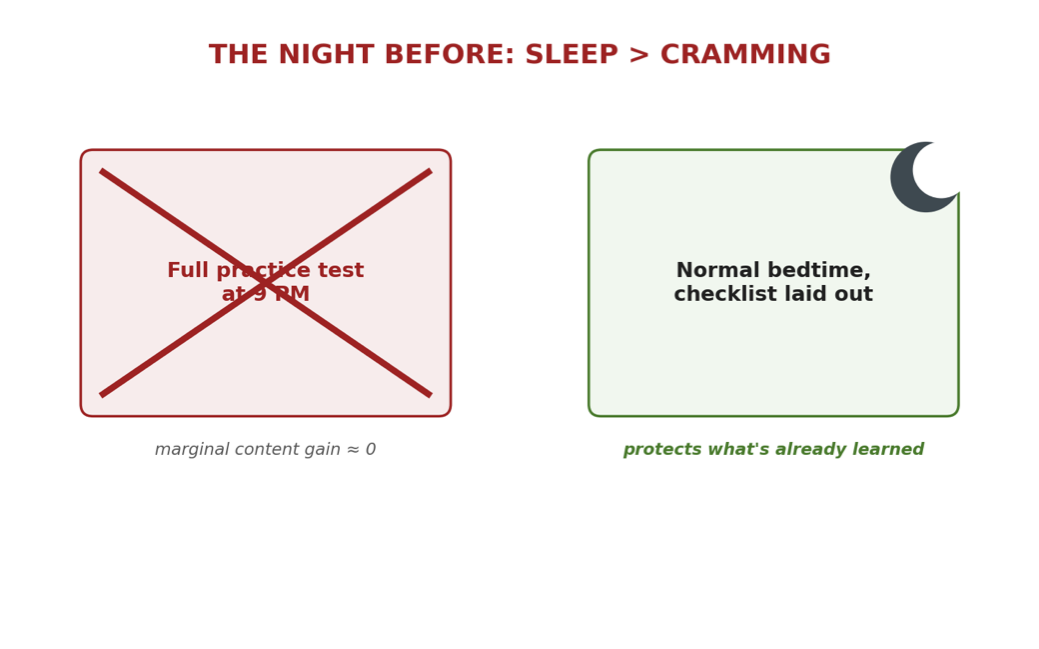
The Night Before the SAT, Here’s What Not to Do

This is the piece of advice I have the hardest time getting students to actually follow, because it feels so counterintuitive in the moment — like admitting defeat instead of pushing through. But I’ve never once seen a student meaningfully help their score by cramming the night before, and I’ve seen plenty rattle their own confidence by doing it. If there’s one instruction I want a family to actually enforce at home rather than leave up to a stressed seventeen-year-old’s judgment, it’s this one: close the books, and go to bed.
Read More

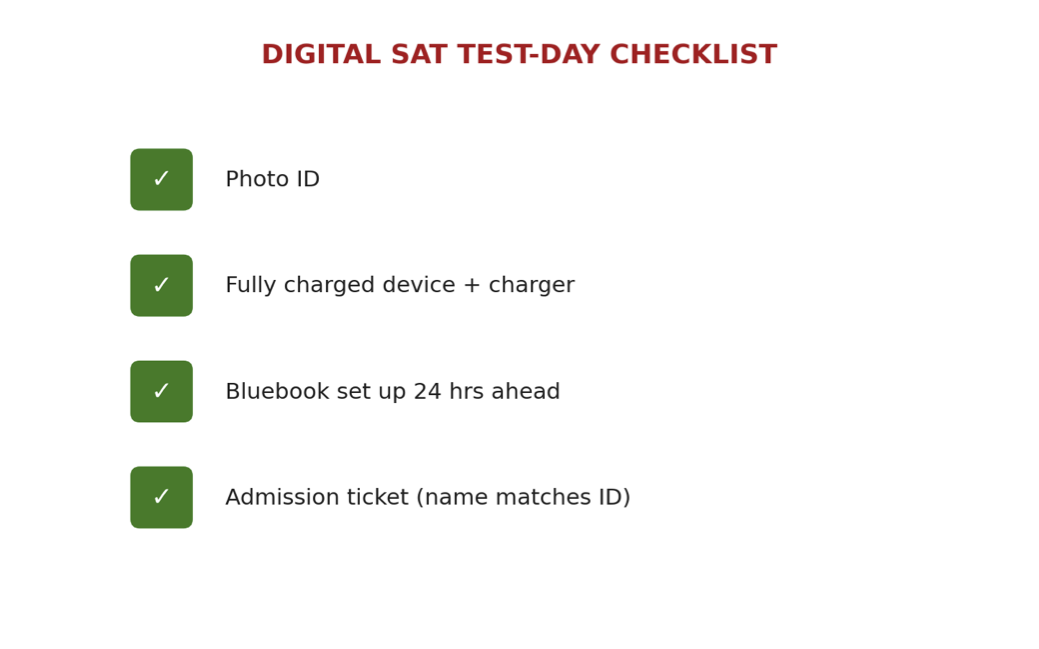
The Digital SAT Test-Day Checklist Nobody Sends You Until It’s Too Late

I genuinely think this is the most avoidable form of stress in the entire process, which is exactly why it bothers me the most when it happens. A kid can do everything right for ten weeks and still have a rough morning because an app needed an update at the worst possible moment. None of that is a reflection of preparation or ability — it’s a logistics failure, and logistics failures are the easiest category of problem to eliminate completely if you just do the boring checklist the night before instead of the morning of.

Read More

“It’s Going Great” Is What Every Kid Says When There’s No SAT Prep Plan

I hear a version of this from almost every family before we start working together — a parent describing this exact loop with real exasperation, like it’s a communication problem between them and their kid. It almost never is. It’s a structure problem wearing a communication costume. Give the studying an actual shape, and the conversation fixes itself, usually within the first week, without either person having to get better at talking to each other. They were fine at that part all along.

Read More

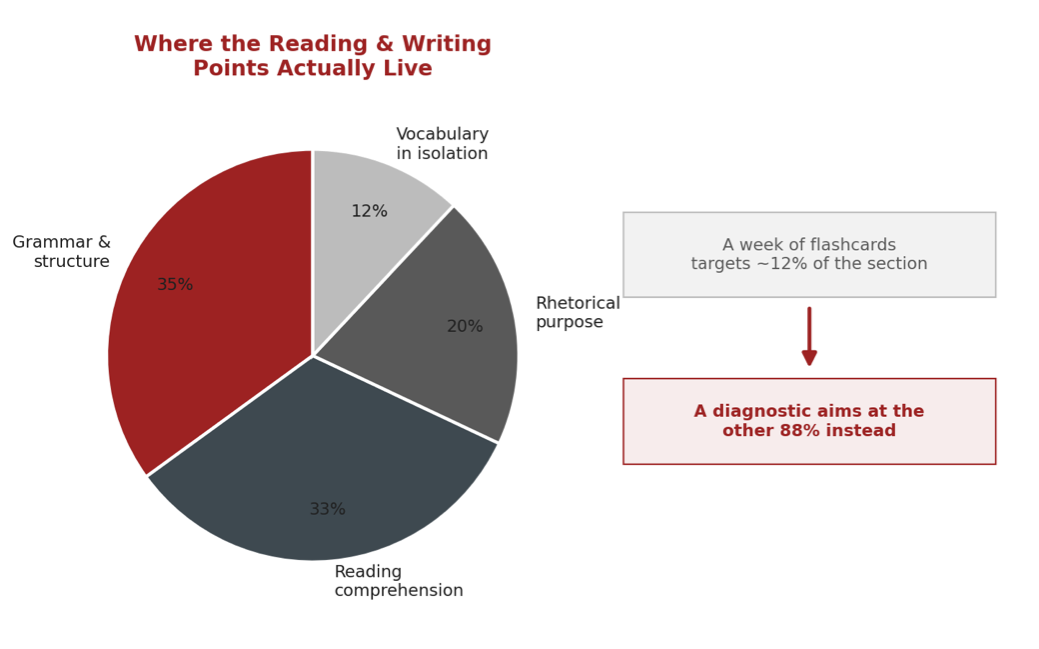
The SAT Vocab Flashcards Weren’t the Problem. Studying the Wrong Thing Was.

If I had a dollar for every stack of vocabulary flashcards I’ve seen a well-meaning, hardworking student carry into a first session, I could probably cover a semester of tutoring for free. It’s not a knock on the kid — it’s exactly what you’d expect someone to do without a diagnostic pointing them somewhere more useful. The frustrating part is watching genuine effort get spent on the wrong target. The good part is that it’s an easy fix, once someone actually looks at where the real gaps are instead of guessing.

Read More

You Don’t Have to Answer the SAT Test in the Order It Gives You

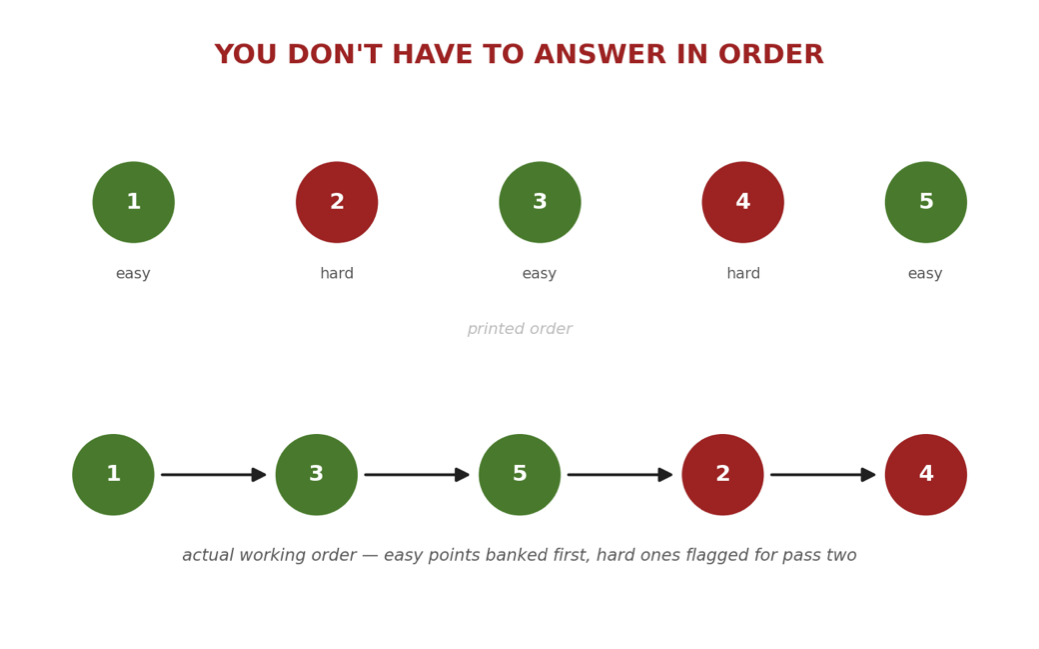
This is one of my favorite pieces of advice to give, honestly, because it’s almost embarrassingly simple and the reaction is nearly always the same: a slightly stunned “wait, I’m allowed to do that?” Yes. You were always allowed to do that. Nobody tells you, because the test is printed in a straight numbered line and it looks like an instruction even though it isn’t one. Once a student sees that the order was never a rule to begin with, a lot of the anxiety around “what if I hit a hard one early” just quietly goes away.

Read More

Every SAT Question Is Worth the Same. So Why Are You Spending Six Minutes on One?

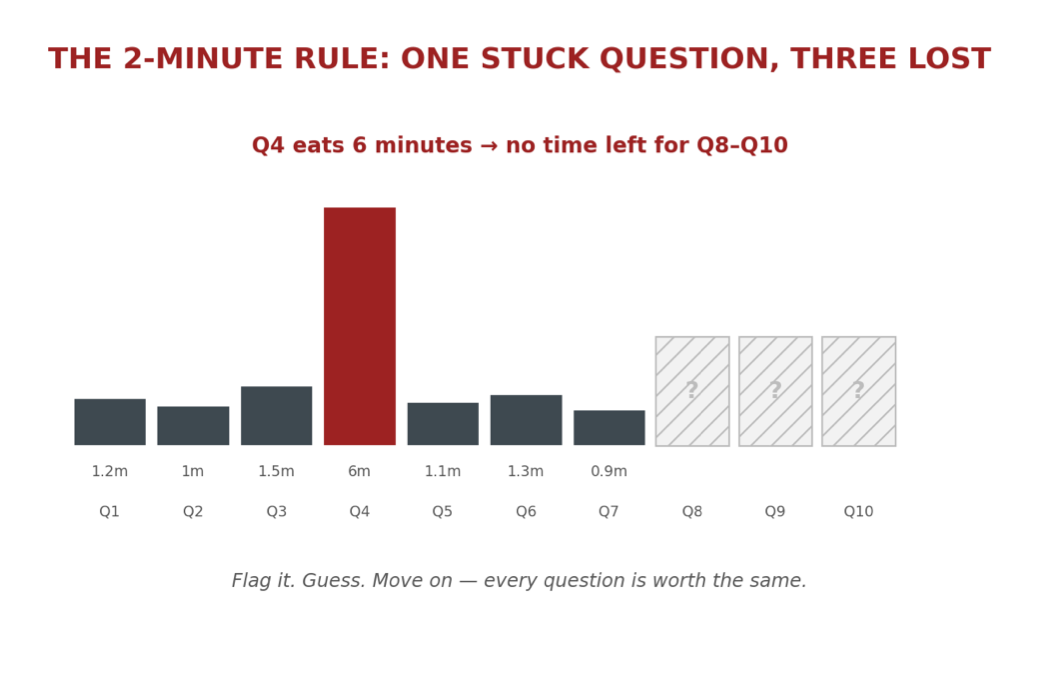
I’ve watched more points lost to stubbornness than to actual lack of knowledge, and that’s not an exaggeration for effect — it’s just what shows up in the data when I review a missed section with a student. The kids who struggle most with this rule tend to be the ones who’ve never really been taught that walking away from a problem is a strategy rather than a failure. Once that clicks, it’s one of the fastest score gains I know how to produce, because it doesn’t require learning anything new. It just requires unlearning one bad instinct.

Read More

The SAT Score Jump Wasn’t the Part My Client Cared About Most

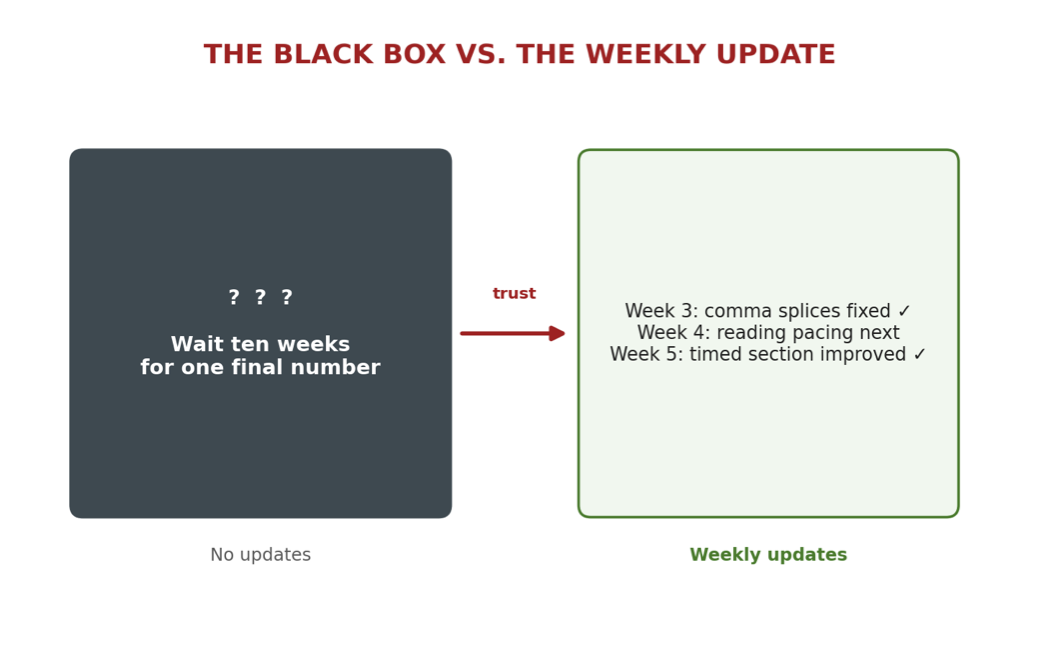
If I had to name the one habit that’s done the most for client retention over the years, it isn’t a teaching technique. It’s the weekly email. It costs me maybe ten minutes a student, and it consistently turns out to be the single thing families mention first when they talk about why the process felt trustworthy. I’d go so far as to say a tutor who can’t or won’t do this regularly is telling you something about how the rest of the process is probably being run, too.

Read More

The 240-Point SAT Score Jump: What Actually Happened in Ten Weeks

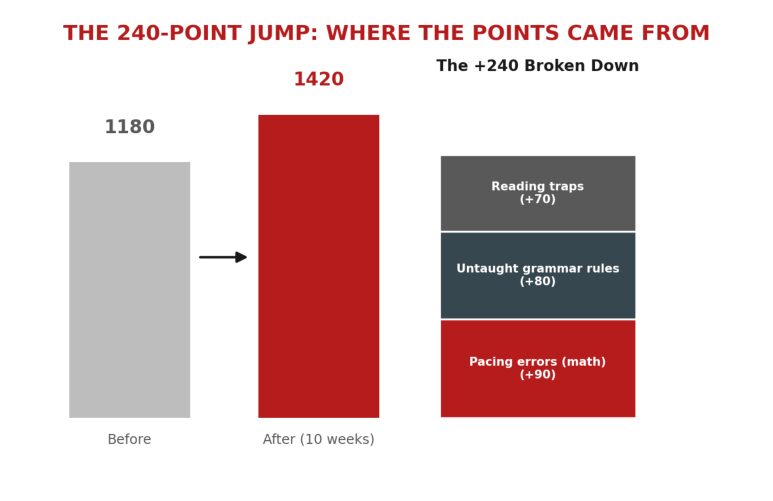
I’ve had this conversation enough times to know exactly where it goes sideways: a parent hears “240 points” and starts imagining a specific technique they can ask me for by name. There isn’t one. What there is, every single time, is the same three-part process — diagnose specifically, target relentlessly, practice realistically — applied to whatever that particular student’s specific gaps turn out to be. It’s not exciting. It’s also the only version of this that has ever actually worked for anyone I’ve tutored, and I’ve stopped apologizing for how ordinary that sounds.

Read More